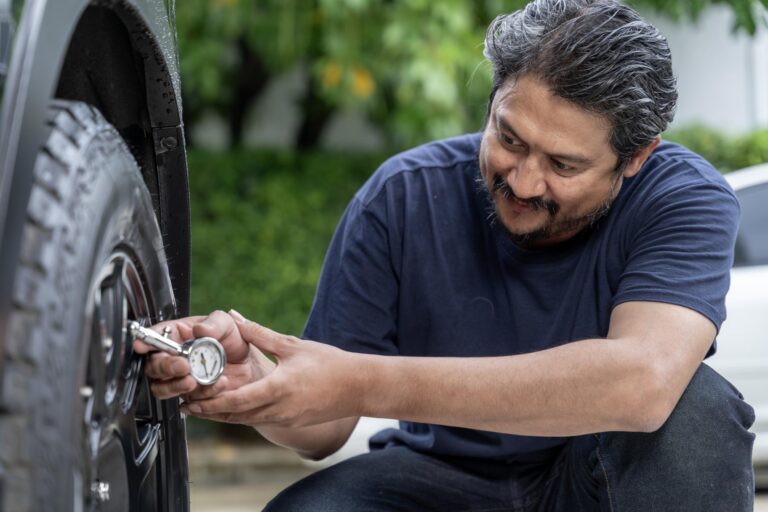
Gas prices go up, gas prices go down—but they never seem to stay down for long. I see it every week in the shop. Someone pulls in, shakes their head, and says, “Steve, I don’t drive any differently, but my MPG is terrible lately.”
Here’s the thing most drivers don’t want to hear: fuel economy problems usually aren’t about driving habits or fancy upgrades. They’re about basic maintenance getting skipped.
Out of all the fuel economy maintenance tips I’ve learned over the years, there’s one that consistently delivers real results—and hardly anyone takes it seriously.
Let’s talk about it.
If I had a dollar for every time this fixed someone’s MPG, I could probably retire early.
Proper tire pressure.
I know. It doesn’t sound exciting. It doesn’t look impressive. But it works.
I had a customer in Peoria last summer driving a mid-size SUV. He was convinced something was wrong with the engine because his fuel economy had dropped by almost 3 MPG. No warning lights. No rough driving. Just more stops at the pump.
We checked his tires. Every single one was underinflated by 6–8 PSI.
Ten minutes later? Tires aired up, problem solved. He came back a month later and told me his fuel economy was better than it had been in years.
When your tires are underinflated, they don’t roll cleanly. They drag. That drag is called rolling resistance, and your engine has to work harder to overcome it.
Harder work = more fuel burned.
Even being a few PSI low across all four tires can cost you noticeable MPG over time. And yes—it adds up fast.
Here in Central Illinois, temperature swings are brutal on tire pressure.
I see this all the time in East Peoria when winter rolls in. A 10-degree temperature drop can lower tire pressure by about 1 PSI. Stack a few cold nights together, and suddenly you’re driving around on soft tires without realizing it.
Your car doesn’t feel “broken.” It just quietly burns more fuel.
If your tires are wearing unevenly, they’re fighting the road instead of rolling smoothly.
Underinflated tires increase steering resistance. If the wheel feels heavier than usual, your fuel economy is probably taking a hit too.
This one confuses people the most. No check engine light doesn’t mean everything is efficient.
That tire pressure warning light doesn’t come on until pressure is very low. By the time you see it, you’ve already lost fuel efficiency.
Once a month. That’s it.
And always check when the tires are cold—first thing in the morning is best.
Most folks assume:
I had a customer from Pekin who hadn’t checked tire pressure in over a year. His car was perfectly reliable, but his MPG was awful. After correcting pressure and alignment, he joked, “I guess I’ve been donating money to the gas station.”
Tire pressure is the big one—but it’s not the only one.
If your wheels aren’t aligned, your tires scrub sideways as you drive. That creates drag and wastes fuel.
An engine needs clean air to run efficiently. A clogged air filter restricts airflow and hurts combustion.
Worn spark plugs cause incomplete combustion. That’s wasted fuel, plain and simple.
Using the wrong oil—especially thicker-than-recommended oil—creates extra friction inside the engine.
These don’t replace proper tire care. They stack on top of it.
I’ve seen people try to “eyeball” alignment. It doesn’t work. Professional tools matter here.
Let’s keep expectations honest.
Most drivers see:
That may not sound huge—but over a year, it can mean hundreds of dollars saved.
And the best part? It costs almost nothing to maintain.
Fuel economy maintenance isn’t one-size-fits-all.
That local experience helps us catch problems faster—and fix them smarter.
If you’re chasing better MPG, skip the gimmicks. Skip the miracle products.
The best fuel economy gains come from simple, consistent maintenance. Proper tire pressure is boring—but it works. Every time.
If your fuel economy has dropped—or you just want to stop overpaying at the pump—we’ve got you covered.
We proudly serve:
✔️ Peoria, IL
✔️ East Peoria, IL
✔️ Pekin, IL
📞 Book your appointment with Kingdom Autocare today and let’s make sure your car is running as efficiently as it should.